Thousands of leaders from government and industry gathered for the Huawei South Africa Connect 2026 on Wednesday, 29 July in Sandton, Johannesburg to examine how AI and intelligent digital infrastructure can assist South African organisations adopt AI at scale.
Themed “Where innovation shapes the future” the event treated South Africa’s first place AI readiness ranking in sub-Saharan as a starting point, with sessions on where AI can deliver in public services, energy, finance, telecommunications and education.
Communications Minister Solly Malatsi framed South Africa’s digital future as a question of participation rather than technology alone. He also said that connectivity and affordable devices are the immediate priorities for widening access to the digital economy.
“We have a responsibility to ensure that we don’t only view AI as a threat to be feared, nor as a trend to be followed lightly. Instead, we should see it as one of the greatest opportunities of our time to solve some of our most pressing developmental challenges,” said Malatsi.
CEO of Huawei South Africa, Will Meng,opened his keynote by reflecting on the World Artificial Intelligence Conference in Shanghai, where South Africa joined as a founding member of the new World AI Cooperation Organisation.
He outlined a three-stage path to AI readiness: informatisation builds connectivity, digitalisation puts data to work and intelligence creates new economic value. Meng said Huawei’s network and grid projects in China as evidence the approach is delivering results.
“Large-scale deployment of artificial intelligence cannot be built without solid digital infrastructure. As proven by global practices, developing economies seeking to advance intelligence must gradually shore up foundations including networks, data and industry digitalisation,” said Meng.
As organisations move beyond AI pilots, Nicholas Ma, Huawei’s corporate vice president and president of global government and enterprise key accounts, introduced the company’s ACT pathway, a framework for taking enterprises from pilot to full-scale adoption.
ACT identifies high-value use cases before organisations calibrate AI models on industry data. Globally, Huawei says the approach has identified more than 1 000 core production scenarios and built a community of more than four million developers.
“South Africa is currently in a critical leapfrog development phase for AI integration. The AI market size is over R50-billion and is expected to triple by 2030,” said Ma. “By taking bold, decisive steps today, we don’t just secure our own success. We need to build an ecosystem where everyone thrives.”
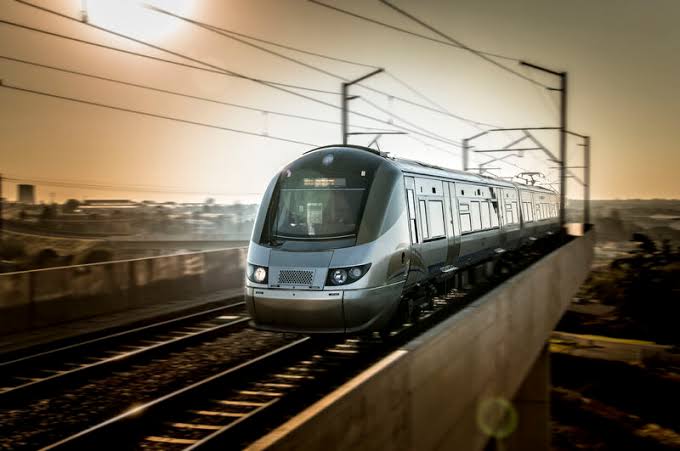
Kui Zheng, deputy general manager of Huawei South Africa, said AI could contribute between R1-trillion and R1.4-trillion to South Africa’s economy by the end of the decade and create up to 400 000 new jobs. Deployments are already under way locally, he said, including a rail security system that has cut cable theft by 80%.